
I. Introduction
In ordinary speech, when we say “utilitarian” we mean something that works but doesn’t pretend to be anything more than that. A utilitarian chair or a utilitarian pen are valued for their usefulness, not their craft. They have no soul; they do not represent commitment to truth and transcendence. The word, in common use, carries a faint air of apology: it does the job, but don’t mistake it for something with deeper ambitions.
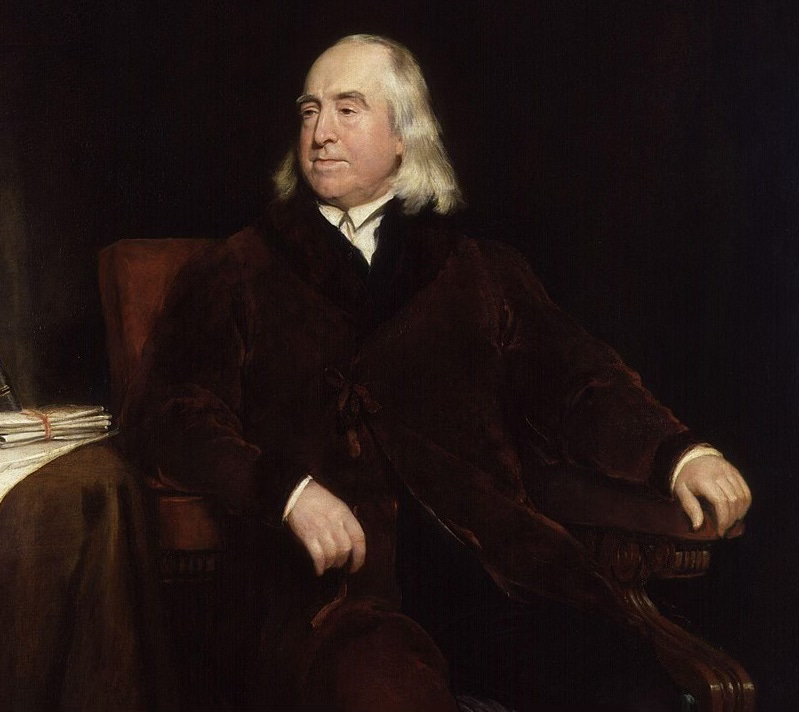
In philosophy, however, a utilitarian is someone who believes that the right action is the one that produces the greatest good for the greatest number, a moral stance that, thanks to the pragmatism that has always accompanied it, can claim a much better record so far than many other moral theories. Its origin, in fact, was from the desire of those like Jeremy Bentham to find a theory to justify social reforms. The normative theory has since become the default moral framework for public policy and the philosophical inspiration behind the animal rights movement, effective altruism, and other lofty, demanding, but hard to argue against moral stances.
So the question “does it work?” has a defensible answer: yes, if we use it with common sense. Used pragmatically, it requires us to treat everyone equally. If, on the other hand, we insist on full consistency, it leads us to some places we would find abhorrent, like having to actively sacrifice a few innocents to increase the good of many. In the infamous trolley problem, utilitarianism would obligate us to actively kill someone if it meant more lives would end up being saved. The philosopher Derek Parfit referred to as the “repugnant conclusion” what follows naturally from utilitarianism: lives barely worth living can be better compared to rich and fulfilling lives if, by their sheer quantity, the former produce a greater amount of total good.
Neither its agreeable implications nor its disagreeable implications have any bearing on its truthfulness, which is a separate question. If it is true, then we would have to accept all its implications whatever we think of them, just as we have accepted the counterintuitive implications of the theory of evolution and of modern physics. If it is not true, then even its agreeable parts would become suspect, as instances of stumbling upon truth without knowing why. They would be incomplete even if useful, like Newton’s theory of gravity, which we use even today in many cases, despite the fact that it has been shown as only an approximation of reality by Einstein’s general theory of relativity.
II. What Utilitarianism Needs to Be True
It is easy to misstate what utilitarianism actually claims, and its critics sometimes do. The theory is not simply that consequences matter, or that suffering is bad, or that we should try to make things better rather than worse. Almost everyone believes those things, and there is no reason not to. Utilitarianism makes a much stronger and more specific claim: that the right action in any situation is the one that produces the greatest total good, with this totality referring to the aggregation of goods across all experiencing entities.
Where does this idea come from? The utilitarian cannot simply assert this, because it is not obvious. My good is available to me in a way that yours is not. I feel my internal states, not yours. I am motivated, ultimately, by what I experience, not by what you experience. This asymmetry cannot be dismissed as a function of selfishness, which is actually a course of action we can adopt or reject; rather, it is merely a fact about the structure of experience, like not being able to see your own eyes directly. So the utilitarians need an argument for why this asymmetry should be set aside when making moral calculations. They need, in other words, a reason to adopt what the great classical utilitarian philosopher Henry Sidgwick referred to as the ”point of view of the universe”, a standpoint outside any particular life, from which all lives look equally real and equally important.
In his 1874 masterwork, The Methods of Ethics, Sidgwick wanted to know whether ethics could be placed on a rational foundation. He identified three methods of ethics that serious people actually use: egoism, which says you should pursue your own good; intuitionism, which says you should follow common sense moral rules that are self-evidently correct; and utilitarianism, which says you should maximize the general good. His project was to show that, properly understood, these methods converge: rational self-interest, moral intuition, and impartial benevolence all point in the same direction. If he could show this, ethics would have the kind of systematic foundation it had always wanted.
He was able to show that the intuitive method, properly purified, converges with utilitarianism. But as for egoism and utilitarianism, he could not show that they fully converge or can be rationally reconciled. What he found was what is called the “dualism of practical reason”: an irreconcilable conflict between the demands of self-interest and the demands of impartial benevolence. There are situations where your good and the general good simply pull in opposite directions, and reason alone cannot tell you which to follow. Sidgwick had enough intellectual honesty to say so plainly. He called it a fundamental contradiction in our moral consciousness and confessed that he could find no solution. But if no solution was found, he wrote near the end of the book, then “it would seem necessary to abandon the idea of rationalizing [morality] completely”.
Peter Singer rightly describes Sidgwick as the greatest of the classical utilitarian philosophers. But he is also someone who demonstrated, more rigorously than anyone, that utilitarianism cannot justify its own central premise. The demand that each person’s good count equally rests, in the end, on intuition: it seems self-evident, from a certain elevated vantage point, that all suffering matters equally. But intuitions conflict. The intuition that my child’s suffering matters more than a stranger’s is just as strong, and in most people considerably stronger. Sidgwick found that reason alone cannot arbitrate between them.
III. The Point of View of the Universe
The conflict arises, I submit, not from a failure of reasoning, but due to the fundamental nature of reality that must ultimately ground any moral theory for it to be true. An accurate account of where moral concepts actually come from is necessary to determine what they mean and how they can be evaluated, just as physics that ended up describing reality began from observations of actual movements of heavens. The search for that origin always takes us towards the individual.
It is not a moral failing, or selfishness, or lack of imagination, or insufficient training in empathy, but merely a structural fact about what it means to be a being that can experience, that your experience is always yours, located in you, accessible only to you, inseparable from the particular body and history and set of relationships that constitute you. When someone you love is suffering, you feel something real and often overwhelming. But what you feel is your response to their suffering, not their suffering itself. Even the most shattering empathy remains, irreducibly, your empathy.
When we say something is good, we always mean good for someone. Good for this person, under these circumstances, with this constitution and these sensibilities. The phrase “good in itself,” detached from any experiencer, reflects an incomplete understanding of what we are referring to. There is no free floating “good” waiting to be maximized.
The utilitarian objection is that we already aggregate across time for a single person. I sacrifice present pleasure for future satisfaction. If this makes sense, why not aggregate across persons too? Parfit argued that if the self has no deep metaphysical reality, if personal identity is, in some sense, a useful fiction, then the boundaries between persons are no more absolute than the boundaries between my present and future selves, and we should treat them accordingly.
The objection, like the scholastic concept of substantial forms, fails to describe reality as seen. Even if we grant that the self is a fiction, experience still occurs in particular locations. When you feel pain, it is your nervous system that fires, your organism that responds. No matter how motivated I am, I cannot motivate you without arousing something in you. When someone on the other side of the world feels pleasure, it creates no sensation in you, regardless of what you believe about the metaphysics of personal identity. The happiness you seek through your actions cannot arrive through the happiness of others, unless that happiness is what makes you happy. What does not occur in you cannot on its own either move you, or enrich you, or harm you, or in any other way constrain you. It can only do these things through what it inspires in you. The body is real even when the self is not. And individual bodies function as unified systems relevant for morality in a way that “all bodies together” simply do not. There is no superorganism whose nervous system integrates your pain and another’s pleasure into a unified sensation. The utilitarian performs an arithmetic operation on quantities that cannot actually be added.
IV. The Right Starting Point
Jeremy Bentham held, following Thomas Hobbes, that humans are governed by two sovereign masters, pleasure and pain, and that self-interest is the engine of all human action. Yet he simultaneously demanded that we maximize the general good impartially, treating the happiness of strangers as equal in weight to our own. His critics pointed out that these two commitments are simply incompatible. Given that “ought implies can”, that a genuine moral obligation requires the capacity to fulfill it, if it is true that we cannot help but seek to increase our own good, then no one can be obligated to act against their self-interest, since it would require one to do something literally impossible, and the utilitarian demand collapses. Bentham, aware of the difficulty, retreated in later years, conceding that people do sometimes act benevolently. But this concession does little to resolve the fundamental contradiction.
The critics were right that there is a contradiction, in the sense that both altruism and selfishness are actions that we cannot help but carry out in response to our own motivations and in anticipation of our own internal states. This is a structural feature of what agents are, which has to be taken as a basic assumption while building any moral theory. When you act, you act from somewhere. Your motivation, however oriented toward others, is housed in you, contingent on you. It seeks to increase the happiness that you can access, which, even when it occurs in others, is your happiness. The parent who sacrifices everything for a child is not acting from nowhere; she is acting that way because her constitution and her reason move her to. This is altruistic in content but irreducibly first-personal in structure. There is no getting behind it to some more impartial substrate without reaching incoherence.
The usual utilitarian objection that this simply licenses selfishness, rationalized and dressed up as ethics, is thus not valid. Self-interest, correctly understood, is not narrow, and selfishness, as we learn from children’s parables and the literature meant for adults, is almost always the worst thing we can do for our own good when the alternative is selflessness. In fact, it is through the discovery of sophisticated solutions for finding one’s happiness that we end up with all the elements that constitute a civilization, while the failure to discover that is what constitutes barbarism. What is involved in attaining one’s good is often far from obvious. It always includes the flourishing of those whose lives are intertwined with one’s own, and it is never easy to see who they are. It includes the stability of the institutions and networks of cooperation on which one’s own life depends in ways one rarely stops to trace. Correctly understood, your good and the good of others are fundamentally, but not irreducibly, entangled. Rights emerge from this reality, despite the fact that nothing in the world guarantees it, much like how prosperity emerges in free markets, despite the fact that it is not guaranteed.
V. A Thought Experiment
To understand this better, let’s consider a thought experiment. Imagine a group of one hundred people. They live and work together, and depend on each other in the ordinary ways that people in a community do. Now suppose each person in this group adopts a genuinely altruistic stance toward all or almost all the others. That is, each person takes the general position that his action should seek to maximize the good of all the others in his group. Consequently, he does not harm others, respects their property and person, shares what he can, does not poison the water or the food or scheme to advance himself at others’ expense.
What does this mean for any individual member of the group? It means that ninety-nine people are actively or passively working to increase his good. Ninety-nine people who will not rob him, will not deceive him, will not harm him for entertainment despite being strangers, will not block his path or undermine his work, help him when he is sick, warn him when there is danger, give him employment or business, share knowledge that saves him time or pain. From the perspective of the individual, this is an extraordinary arrangement. No individual acting alone, however talented or resourceful, could replicate what ninety-nine collectively provide.
To scale this is to become more sophisticated as a civilization, whether we do it through the framework of religion or nation state or something else. As the size of the group increases, the cooperative surplus grows, with more minds and bodies, more skills, more knowledge, more redundancy against catastrophe. As the circle grows, something fundamentally different begins to happen. In a group of a million people, all operating within a framework of mutual concern, the network becomes so dense and so varied that its benefits become difficult to even enumerate. Someone in that million is working on a problem you did not know you had. Someone is building an infrastructure you will rely on in an emergency you cannot foresee. Someone, on the other side of the world, or maybe a different time period, whom you will never meet and who will never know your name, could end up developing the medicine that will save your or your loved ones’ life. Your life, in this sense, is already a product of a moral circle far wider than the one you consciously inhabit.
Now consider the alternative. Suppose you decide that you know what is good for you, that you are clever enough to foresee all the nuts and bolts that go into making a good life, that the distant stranger is not your concern and your moral circle ends at the boundaries of your immediate tribe. You weaken the network not only by reducing your contribution, but also by the effects you inspire. Because of how interconnected the network is, you and others lose the thousand invisible contributions that a larger cooperative network makes to your life every day.
This, almost incidentally, explains something that philosophical accounts of moral progress have always struggled to explain: why the circle of moral concern has in fact expanded over human history, and why it has expanded in rough proportion to the expansion of cooperative networks and civilizational sophistication. It is not just because philosophers wrote persuasive books. It is not just because human nature improved. It is because our knowledge aligned with the objective facts of the world: our moral concern grew, and as it grew, the cost of exclusion rose and the benefit of inclusion became harder to ignore.
Utilitarianism looked at this process and drew what seemed like the obvious conclusion: the expanding circle reflects an expanding moral truth, the gradual recognition that all suffering counts equally. But this gets the causation backwards. The circle did not expand because people became more impartial. It expanded because people became better at understanding what was actually good for them.
VI. So What Is Utilitarianism?
Utilitarianism is best understood not as a moral truth but as a formalization of an observed regularity. That regularity does not require its principle. What drives the expansion of moral concern is not the dawning awareness that all suffering counts equally from the point of view of the universe, but the accumulating evidence, acquired through experience and transmitted through culture, that one’s own good is more entangled with the good of others than it first appears.
A useful approximation and a fundamental truth fail in different ways. Newton’s theory of gravity works extraordinarily well within the conditions of ordinary life. But it is not true in the way that its practitioners once believed it was true. It rests on a picture of reality, involving absolute space and instantaneous gravitational force, that turns out to be incomplete. Under extreme conditions, near the speed of light or in the proximity of massive objects, the approximation fails and gives wrong answers. This discovery required pushing the theory to its limits, under conditions that are far from those of ordinary experience.
Utilitarianism fails in the same way. Within its domain of reliability, which is roughly the domain of public policy and institutional design, it gives sensible answers. When we are deciding how to allocate scarce medical resources, or whether a regulation produces more benefit than harm, treating each person’s good as counting equally is not only reasonable but difficult to improve upon. The utilitarian framework was, after all, designed for exactly this purpose: Bentham wanted a tool for evaluating legislation, and the tool he built works well for that task, just as Newton’s equations work well for launching satellites.
But once we push the theory beyond this domain, and insist on its literal truth, it begins to produce answers that are not merely counterintuitive but incoherent. The trolley problem reveals a flaw in our moral reasoning, but it also reveals a flaw in the theory. To say that you are obligated to kill one person in order to save five is to treat human lives as fungible units in a calculation, an operation that requires precisely the detachment of “good” from any particular experiencer that the theory assumes but cannot justify. Parfit’s repugnant conclusion follows by the same logic: if good is a free-floating quantity to be maximized, then a world of billions of people whose lives are barely worth living is morally superior to a world of millions living richly and fully, so long as the total is greater. The theory demands this because the theory has no resources with which to resist it. Once you have abstracted good away from the beings in whom it occurs, you have lost the only basis on which such a conclusion could be refused.
If, on the other hand, good is always good for someone, located in a particular body with a particular constitution and history, then there is no perspective from which all goods are commensurable. The question, then, is for each individual, and it is “what does my good actually require?” And the answer, as our thought experiment illustrated, is that it requires far more than most people suppose. Consequently, the practical recommendations overlap extensively with those of utilitarianism. Both say: expand your concern, consider the stranger. But the reasons are different, and therefore the limits are different.
What utilitarianism is, then, is something close to what the ordinary use of the word has always suggested. It is the right tool when you need to make decisions for large groups and cannot attend to every particular. But it is not true in the way that a moral theory needs to be true: it does not describe the actual structure of moral reality, which is irreducibly local. The moral progress it claims to explain is real, but the explanation runs in the opposite direction. We did not expand our moral concern because we discovered that all suffering counts equally. We expanded it because we discovered, slowly and at great cost, that our own good required it.
Continue Reading:
→ Overcoming the Naturalistic Fallacy
→ Michael Huemer: Nature of Knowledge, Foundations of Morality (podcast)
→ Review of Tyler Cowen’s Stubborn Attachments
Other Projects:
→ Universal Open Textbook Initiative (free, multilingual textbooks)
→ Aesthete (visualize your taste — iOS app)